Tuesday, November 19, 2013

MARTIN SCORSESE


Birth name:
 Martin Marcantonio Luciano Scorsese
Director and actor

Background--

Birthday: November 17, 1942 in New York City. (71)

Raised in neighborhood of Little Italy, which inspired him in his films. 
Spouses: Laraine Brennan, Julia Cameron, Isabella Rossellini, Helen Morris
3 children.

Acted in--
Mean Streets (1973)
Taxi Driver (1976)
Dreams (1990)

Best Known for--
Goodfellas (1990)
Shutter Island (2010)
The Departed (2006)
Hugo (2011)

Trademark--
Italian mafia theme
Begins his films with segments taken from the middle /end of the story.
Slow motion techniques
Diagetic music, where the source of the music is seen on the screen
Long tracking shots.
Freeze frames
Music by Rolling Stones : Gimme Shelter 
Setting in NYC
Unflinchingly graphic and realistic violence.
Popstars given small acting roles. 
Cameo apperances with his family and himself.
Reference the work of Michael Powell
Movies are cut to the music.
Concern with beauty of every shot.
Encourages improvisation in dialogue.

http://youtu.be/uDXzEEl8ALk?t=40s


List of Directed Films--

Year
Film
1974
1976
1977
1980
1983
1985
1986
1988
1990
1991
1993
1995
1997
2002
2004
2006
2011

Awards--
1974 Alice Doesn't Live Here Anymore
Academy Award for Best Actress: Ellen Burstyn
BAFTA Award for Best Film
BAFTA Award for Best Actress in a Leading Role: Ellen Burstyn
BAFTA Award for Best Actress in a Supporting Role: Diane Ladd
1976 Taxi Driver
Cannes Film Festival – Palme d'Or
BAFTA Award for Best Actress in a Supporting Role: Jodie Foster
BAFTA Award for Best Film Music: Bernard Herrmann
BAFTA Award for Best Newcomer: Jodie Foster
1980 Raging Bull
Academy Award for Best Actor: Robert De Niro
Academy Award for Best Film Editing: Thelma Schoonmaker
BAFTA Award for Best Newcomer: Joe Pesci
BAFTA Award for Best Editing: Thelma Schoonmaker
Golden Globe Award for Best Actor – Motion Picture Drama: Robert De Niro
1985 After Hours
Best Director Award (Cannes Film Festival)
1986 The Color of Money
Academy Award for Best Actor: Paul Newman
1990 Goodfellas
Academy Award for Best Supporting Actor: Joe Pesci
BAFTA Award for Best Film
BAFTA Award for Best Direction
BAFTA Award for Best Adapted Screenplay: Martin Scorsese, Nicholas Pileggi
BAFTA Award for Best Editing: Thelma Schoonmaker
BAFTA Award for Best Costume Design: Richard Bruno
Venice Film Festival: Silver Lion for Best Director
1993 The Age of Innocence
Academy Award for Best Costume Design: Gabriella Pescucci
BAFTA Award for Best Actress in a Supporting Role: Miriam Margolyes
Golden Globe Award for Best Supporting Actress – Motion Picture: Winona Ryder
1995 Casino
Golden Globe Award for Best Actress – Motion Picture Drama: Sharon Stone
2002 Gangs of New York
BAFTA Award for Best Actor in a Leading Role: Daniel Day-Lewis
Golden Globe Award for Best Director
Golden Globe Award for Best Original Song: U2 for the The Hands That Built America
2004 The Aviator
Academy Award for Best Supporting Actress: Cate Blanchett
Academy Award for Best Film Editing: Thelma Schoonmaker
Academy Award for Best Cinematography: Robert Richardson
Academy Award for Best Costume Design: Sandy Powell
Academy Award for Best Art Direction: Dante Ferretti and Francesca Lo Schiavo
BAFTA Award for Best Film
BAFTA Award for Best Actress in a Supporting Role: Cate Blanchett
BAFTA Award for Best Production Design: Dante Ferretti
Golden Globe Award for Best Motion Picture – Drama
Golden Globe Award for Best Actor – Motion Picture Drama: Leonardo DiCaprio
Golden Globe Award for Best Original Score: Howard Shore
2006 The Departed
Academy Award for Best Picture
Academy Award for Best Director
Academy Award for Best Adapted Screenplay: William Monahan
Academy Award for Best Film Editing: Thelma Schoonmaker
Golden Globe Award for Best Director
2011 Hugo
Academy Award for Best Cinematography: Robert Richardson
Academy Award for Best Art Direction: Dante Ferretti and Francesca Lo Schiavo
Academy Award for Best Sound Editing: Philip Stockton and Eugene Gearty
Academy Award for Best Sound Mixing: Tom Fleischman and John Midgley
Academy Award for Best Visual Effects: Robert Legato, Joss Williams, Ben Grossmann and Alex Henning
BAFTA Award for Best Production Design: Dante Ferretti and Francesca Lo Schiavo
Golden Globe Award for Best Director
Scorsese received the AFI Life Achievement Award in 1997.

Sunday, November 3, 2013

CINEMATOGRAPHY

1. Overall Look
The cinematographic aspects of The Diving Bell and The Butterfly, adds up to an overall look. The quality of the film stock is that it shows the point of view of the protagonist when he is paralyzed from his stroke with the use of a blur effect. The lighting of the film helps predict the upcoming of the protagonist and builds up suspense for the audience.The lenses were used artistically. The producer placed a latex skin over the lenses and sewed it together to show the audience what the protagonist sees when his eyes get sewed together. The frames were used to show the beautiful view of the ocean. The producer used the angles to show the whole picture of the long takes, and the camera movements were smooth and sometimes rough to let the audience experience what the protagonist is experiencing.


2. Images
In the film, we can see pictures of the younger Jean-Do and his healthy and well self with his father taking care of him. The picture soon fades to the image of his father having to call his handicapped son and wishing him well, from what he was once before a healthy child, to a handicap.


Image of young and healthy Jean Do

3. Shot Length
The shot length is kept still for a few seconds then slowly zooms out and shows the whole view. The purpose of the long shots are used to empathize the loneliness of Jean-Do.

         The far shot showing the bond and also loneliness in which he feels at the beach with his family

4. Shot Types
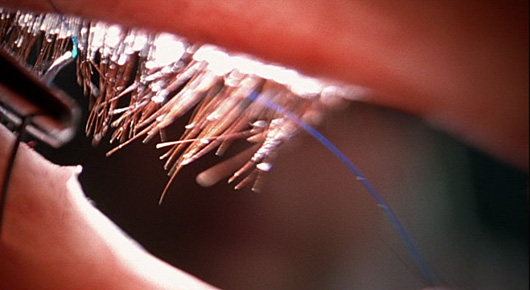
The extreme close-ups of the film were used to show the audience the experience of the surgeries that Jean-Do have to go through in the hospital. While the extreme long shots were used to show the feelings of loneliness and isolation that Jean feels since he been paralyzed in the hospital.


                                                          Jean getting his eye sewed.

5. Camera Angles
The angle type that was mainly used is the reverse shot, in which the other character is looking at the pother character so there is an illusion that they are looking at each other. This shows how the protagonist sees and feel about the people he interact with and tells the audience how the protagonist feels about them. The high angle shots are used to show the protagonist's temptations of suicide and wanting to give up, but the low angle shots shows the constant reminder of Jean's will to live.

Jean Do feeling a feeling of hopelessness at the beach.


6. Composition
The composition of the shots were in the rules of thirds and the painterly way. Some scenes shows that Jean is very lonely and has a self pity feeling, while in some rules of third shots, it is shown that he has family and is loved. The scene in which is a bit painterly is the part in which Jean is about to pass away and his body is weak. This is used to show the weakness and fragileness of Jean in his current condition of being ill.


Right before Jean passes away the painterly image of his nurse by his side.


7. Camera Movement
The camera movement is used to show the protagonist's point of view, experiences, feelings, and his thoughts. When Jean is getting carried, the camera shakes and help us feel how the character feels. In other scenes like the parts of which the wind hits the camera shows how the wind bothers and affect Jean but he can not do anything about it because of his current state.


                         The nurse's hair blowing in Jean's face and his inability to do anything


8. Cinematography Style
The cinematography style is intentional to show the point of view of Jean Do's experience of his stay in the hospital. The purpose of this is to help the audience feel as if they are in Jean's position of being paralyzed with a slight hint of humor.


   Jean's days at the hospitals in which he has problems getting the channel changed and is not pleased.

Monday, September 23, 2013

Dark Films~ ( Blog #2)

Film noir is a term in which I have never heard of until today. Film noir means " black film" or "dark film," as stated by John Lithgow. Film Noir has a dark feeling which makes it a bit uncomfortable. A famous film noir is called "Double Indemnity." This film is believed to be the creator of the film genre. There are three factors that is persistent in a Film Noir. The first factor is that everybody dies at the end, the second is that the women tends to seduce the male, and finally there is a sense of jeopardy in the protagonist's life.


John Lithgow states that Film Noir is "The only order a kind of moral restitution everybody dies at the end." This is seen and exemplified in Double Indemnity when Walter Neff, an insurance salesman meets Phyllis Dietrichson, wife of his client. This film is a perfect example of how everybody dies at the end. Not every character in the film dies, but the protagonist and antagonist both dies. Another factor of a Film Noir is how the woman seduces the male to receive something of her value.
In Film Noir, the female tends to seduce the male to receive what she desires in return. Marie Windsor, an actress, states that " A woman usually get the man into bed then into trouble." This idea can be seen in Double Indemnity. Phyllis is seen half naked in her first appearance. She seems to not want Walter at first, but soon after she heard about the price of life insurance and her benefits, she starts to seduce him. She seduces him and other men in order to gain money. The third factor of a film Noir is when there is a sense of jeopardy in their lives.
The sense of jeoperdy in their lives means that there is a sense of trouble that is exaggerated and nothing the individual themselves can do to fix the problem. We can see this in Double Indemnity also, when Walter's plan starts to fall apart. He makes up more ideas and thinks of more ways to fix the issue and gets wrapped up into the murder. Then he soon decides to murder Phyllis also.


In the documentary " PBS American Cinema Film Noir," the idea that a woman uses her sexuality to get what she is after and what she is after is not the man in the picture, he is an another tool for what she is after for herself, (20:18) as stated by an interviewed personnel. This is the best way to spot a Femme Fatale. We can see in the film of Double Indemnity is that Phyllis acts and seduces Walter to get what she wants. Another example in the film was that when her daughter stated that she [Phyllis] killed the previous wife for the same profit. This is typical in a film noir because this also happened in China Town.


The different angles and lighting of Double Indemnity helps with the suspense build up of the film. The camera helps make this film have a "film noir" feeling to it by having many different angles. The Angles help show the audiences the shadow and the minor details that helps predict the film. The lighting also help in a way that it signals if an unfortunate event was about to take place. The design of the stage was well made that the camera was able to capture the whole area. The Mise-en-scene, staging or putting on an action or scene, influences the audience's reaction to the film. The lighting is one of the factors of a mise-en-scene. The lighting is bright normally, but as soon as Walter plans out his idea of murder with Phyllis, the lighting is changed and shapes Walter as an evil man; in comparison to his first appearance, he is seem as a dark man with a cold heart.

The sound helps build suspense and play with our emotions. In a sexual scene, the music is pretty and slow, but as soon as a murder, or a secret conversation arises, the music speeds up and gets louder and softer according to what is happening. We can see this in Double Indemnity when Walter makes love with Phyllis and the music is pretty and slow, as soon as they finish and the topic of the murder arises again, the music speeds up and builds suspense.

Color in a "Neo Noir" compared to a black and white cinematography is a more relate able and realistic.
An example of a Neo noir film is called China Town. China Town has many factors that relates to a film noir. The only difference is the color of photography. Three factors in which China Town is similar to a Film Noir is the factor of the seducing female role, the music, and the mise-en-scene.


In the film China Town, the main female (Evelyn Mulwray) is seen as a dominating and strong woman. She seduces the man for her own personal interests. She lies and has sexual activities with the male lead ( J.J Gittes).She uses Gittes in order to help her take her child to an another country for their safety. The second factor in which China Town relates to a film noir is that the music is similar. The music is slow when Gittes first encounters Mrs. Mulwray. But as they meet continuously and he sees the truth, the music speeds up and changes the dynamics in the events. The music's speed is used to help create suspense! The third factor is that the setting of the films are similar. The lighting helps us visualizes and understand the characters and bond with the character's feelings.

Sunday, September 15, 2013

What to be considered as a movie? (Blog post 1)

When I watch a movie, there are certain criterias that has to be met. For a movie to interest me, first the actors has to portray their characters. If they can not portray their character, then the movie will lose it's meaning and will not connect with the audience. Second, the movie has to have a solid ending. Meaning that the ending has to answer the questions that the audience might have in the beginning and it has to make sense. Third, in order for a film to recieve an award, the film has to leave an impact on the audience. There are good films and there are great films. Good films are films that are for graphics and has no meaning to the movie, they are still enjoyable, but if you were to ask people about it; they would barely remeber about it in the future. Where as a great film, would leave the audience thinking and they would remeber it for a long time. Such as the Titanic.


In the film " Le Voyage Dans La Lune," and " The Great Train Robbery," the aspects that appealed to me the most was how the story flow was smooth. Although there was no direct dialouges presented, the character's actions were clear and can tell the story well. This old film also have great transitions between scenes and makes a good attempt of changing the background to fit in with the location in which the film took place. I also liked how they figured to use different locations in their films. Their camera movements were also good, considering how they did not have the right technology to hold the camera still while filming on a moving train. This leads to my 2 most favorite films.


My first favorite film is called "Schindler's List." I absolutely love this movie because of the history, music, and the acting within the film. This film makes your heart sink and not take things for granted. The characters portray and play their part well. The ending answered the questions that the audience might ask while watching and the film left a big impact on me. The film is in black and white, but there is a significant scene in which is the only part in which there is color. This is a film to remember. It has many symbolisms and is historically acurrate. The only part in the film where the little girl is wearing red, leaves the audience thinking.

What is the significances of the little girl in the red coat?  

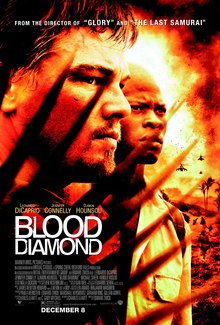
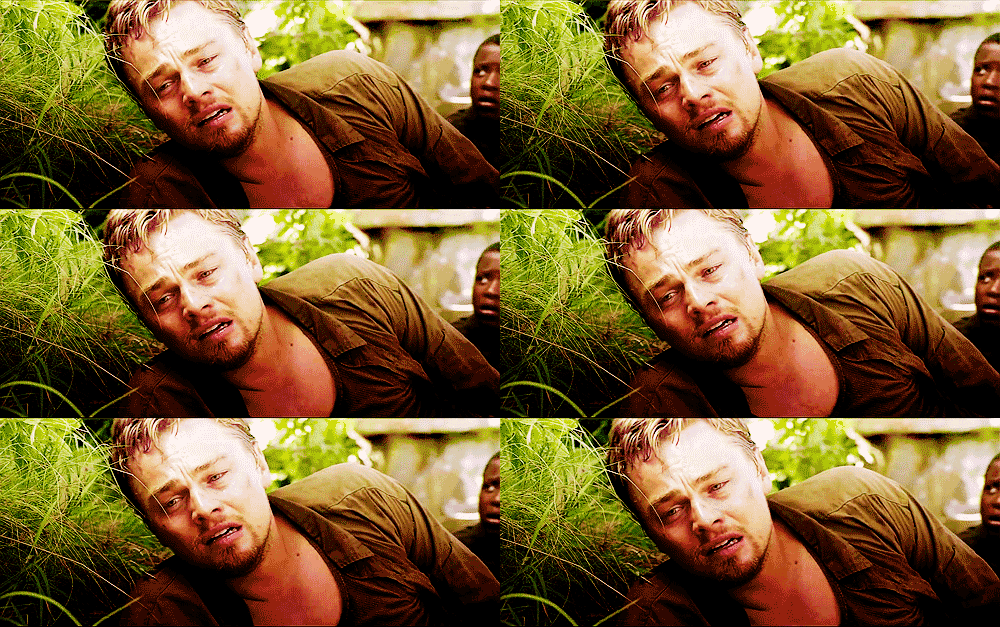
My second favorite movie is "Blood Diamonds." This film also meet my three criterias. This movie has great actors which portrays their character well, the ending was memorable because it offered a resolution for the film, which makes the audience feel a bit at ease, and it leaves an impact on the audience because the film is about smuggling diamonds and also shows the horrible results and impact of imperialism in foreign countries and the bitter reality in Africa.


* This is Leonardo Dicaprio's playing his character, Danny Archer.*


Sunday, September 8, 2013

9/7/2013 : Favorite Movie ~

Growing up in the 21st century, technology is always growing and changing. Television is always changing also. From black and white animation to 3D high definition. I love old films that has a great message for the audience. I watch movies at the theaters with my brothers and sister and I also watch movies online. My favorite movie genre is mystery, romance, and horror.


One of my most favorite film that I have enjoyed is called "Edward Scissorhands." This film not only contain a hint of Fantasy and drama, it also contains Romance. I love how the movie teaches the audience the many different personalities a person can portray. People change as time past on. The romance between Edward Scissorhands and Kim Boggs evolves but does not have a fairy tale ending. My favorite scene from the film was when Kim was dancing in the snow when Edward was sculpting the pillar of ice. Kim spanned gracefully and had a beautiful smile on her face. I love how the movie is realistic about how judgmental an individual can be when they are put in touch situations. The film taught me that there are people out in the world who take advance of young naive individuals.


Overall, my favorite film to watch is Edward Scissor hands. I love this film because not only does it set a great example for the audience, it is also different from the typical romance films. I learned  many lessons on how to embrace yourself and accept yourself from this film. If I were to recommend a film for my family and friends, I would recommend "Edward Scissor" hands.